
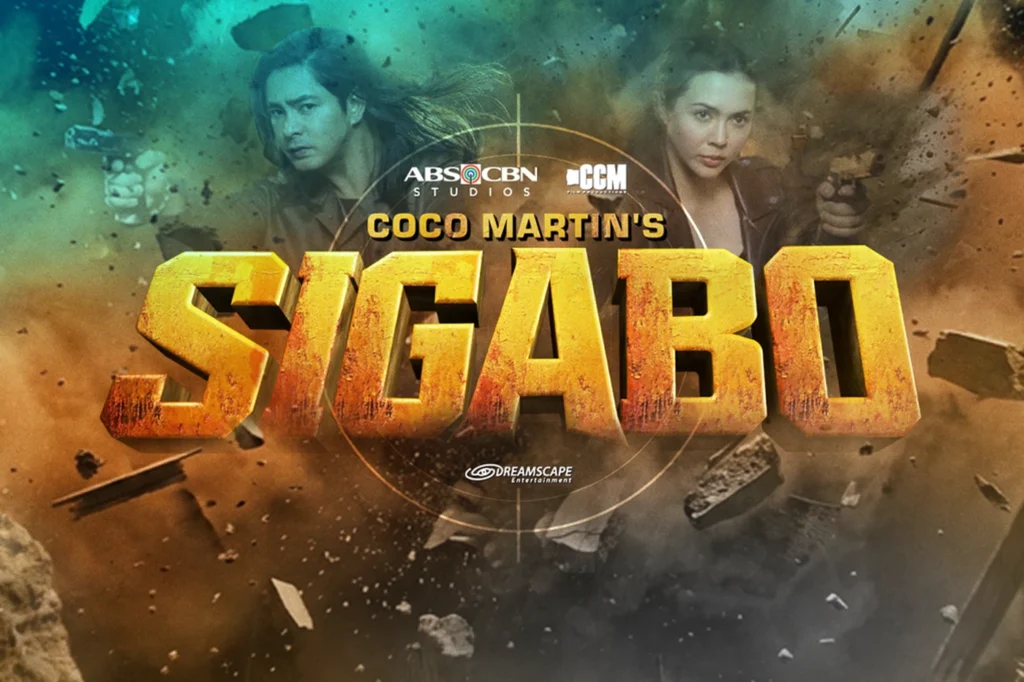
My first reaction when I saw the alleged AI-generated scene from Sigabo was very simple:
What the fuck? ABS-CBN allowed this? Coco Martin allowed this?
And then the disappointment kicked in.
Because this is ABS-CBN. This is a major television production. There are surely creatives working behind the scenes of this program. Editors. Designers. Visual effects artists. Production staff. People who have spent years developing their craft.
Yet somehow, a scene that viewers immediately suspected was AI-generated made it to primetime television.
The Sigabo AI controversy started after viewers called out a wedding scene for visuals that looked unnatural. Faces appeared strange. Details felt off. The scene quickly circulated online, and people began questioning whether generative AI had been used in the production.
Whether every accusation about the scene turns out to be technically accurate or not, I think the audience reaction itself tells us something important.
People can tell when something feels creatively wrong.
And creatives should be paying attention.
I Use AI Every Day
I need to make this clear before anyone assumes this is another anti-AI rant from a creative who is terrified of technology.
I use AI every day.
I use it for brainstorming. I use it to challenge ideas. I use it when developing strategies. I use it to explore different angles for content.
Sometimes I even argue with ChatGPT because it gives me something painfully generic.
AI is already part of my creative workflow.
But I don’t mainly use AI to generate my images or videos. More importantly, I don’t let AI tell me how I should present my work.
That decision is mine.
I have spent more than nine years working in the creative industry. I’ve worked in content writing, social media, graphic design, video editing, and digital marketing. One thing I’ve learned throughout those years is that creative work is filled with decisions that cannot simply be reduced to pressing a button and accepting the first output.
Why this layout? (The paragraphs are not aligned.)
Why this shot? (Oh, you wouldn’t want to sit beside me in a cinema.)
Why this font? (Montserrat? Again?)
Why does this scene need to feel uncomfortable? (Semiotics maybe?)
Why should we cut here? (The boom mic got in the frame. That’s why!)
Why should we leave two seconds of silence? (To make the scene uncomfortable.)
Why should the audience notice this detail? (Because I want to make the scene uncomfortable.)
Those decisions are part of the work.
AI can give me options.
I still decide what deserves to exist.
The Problem Isn’t AI. It’s Lazy Creatives.
This might piss off some creatives, and that’s okay.
Mediocre and lazy creatives are exactly the ones AI will replace.
And maybe that’s the biggest elephant in the room that we need to address.
If you’re using AI because you just want to press the right buttons in your software, or you just want to go with the first decent idea that Claude, Gemini, or ChatGPT gives you, or you don’t want to think at all, you should probably be worried. AI might replace you before you finish your Starbucks barista drink.
The creatives who will get out of this alive are the ones with taste.
The ones with judgment.
The ones who scrutinize the tiny details to see the bigger picture.
The ones who look at an output and immediately say, “No. Something is wrong.”
That’s exactly why the Sigabo controversy bothers me.
The audience noticed.
People saw the scene and immediately started examining the faces, the details, and the overall visual quality. Online discussions questioned the alleged use of generative AI and what it could mean for the artists working in Philippine television.
The audience did the quality control that should’ve been the job of everyone involved in the TV series.
That should scare creatives more than AI itself.
If the Audience Notices the Tool Before the Story, You Failed
This is where I personally draw the line.
And to give the creatives behind Sigabo the benefit of the doubt, maybe there was a creative process behind that scene.
Maybe someone spent hours prompting the AI. Maybe there were dozens of iterations. Maybe they carefully described the composition, the mood, the characters, and every other detail to get as close as possible to the result they wanted.
I can respect that. Prompting AI to achieve a specific creative vision is still a process.
But the final output is still the final output.
In storytelling, the audience is supposed to experience the story.
I Don’t Want to Become a Lazy Creative
I’ll admit something. AI has made my work faster. There are things I can brainstorm in minutes now that would have taken me hours or days a few years ago, and I love that convenience. Who doesn’t want convenience? But I also know it can be dangerous because once you get used to speed and instant gratification, it’s very easy to lower your standards without noticing.
It starts with that single AI-generated image you don’t scrutinize enough, that one generic caption that you publish because it sounds decent, or that one video where you ignore the weird details because “pwede na.”
Until eventually, you’re no longer directing AI. You’re just approving whatever it gives you. AI slop, if that makes sense.
I don’t want to become that creative. I don’t want someone to look at my work and immediately know where I got lazy. Earlier in this blog, I said mediocre and lazy creatives are the ones AI will replace. I have to hold myself to that same standard.
Because people can tell. Maybe not everyone will notice every detail, but another designer will. An editor will. A photographer, filmmaker, or creative director will.
Heck! Even a Twitter stan account will notice! And that’s the worst, by the way! (IYKYK) And as the Sigabo controversy has shown us, regular audiences are becoming increasingly good at noticing too.
AI Doesn’t Have Taste.
AI doesn’t have taste. I do. Maybe that’s where I want to end this.
The creatives working on Sigabo do, too. At least, I want to believe they do.
And that’s why I keep thinking about what AI could have done for that scene instead.
Use AI to brainstorm the sequence, explore different visual directions, create a storyboard for the wedding scene, and even play with compositions and test lighting, camera angles, and the overall mood before anyone steps onto the set.
There are so many ways AI could have helped the production create that scene. But using AI to allegedly substitute for the actual scene itself? That’s where you lose me.
Yes, I know ABS-CBN has been through a lot. The network is still recovering from the loss of its broadcast franchise in 2020. The ABS-CBN I grew up watching is operating in a completely different media landscape now, and I’m sure budgets, timelines, and production decisions look very different behind the scenes.
I can acknowledge all of that.
But if ABS-CBN wants to regain even a fraction of its glory days, using AI as a substitute for scenes that audiences expect real creatives to execute isn’t the way to do it. Especially when the audience notices and starts doing the quality control. Most especially when the conversation after the episode becomes about distorted faces and AI artifacts instead of the story you were trying to tell.
AI could have helped build the scene, helped the creatives visualize it, and made the pre-production process faster.
Then let everyone do their jobs. Let the directors direct. Let the cinematographers shoot. Let the production designers build. Let the editors edit. Let the VFX artists create.
LET CREATIVES CREATE.
Because AI doesn’t have taste. We do.
And if we use it correctly, AI won’t need to replace us.
Let us not surrender the one thing that made us creatives in the first place.

